
Your needs, this model
Does it fit your priorities?
Does the 609-square-foot 4.8-ACH rating cover the room you need to clean repeatedly?
Blueair's exact table directly lists 609 sq ft at 4.8 ACH. The separate much larger 30-minute/one-hour headlines differ between the page hero and FAQ, so use 609 for the repeated-cleaning requirement.
Explore this need in the finder →Would you use a local numeric reading for PM1, PM2.5 or PM10 rather than only an app update?
The CP7i display toggles through numeric PM1, PM2.5 and PM10 readings one at a time; the selected display channel does not change what the purifier filters.
Explore this need in the finder →Do you need sensor-based automatic fan changes as well as physical buttons?
The CP7i has local controls and an Auto mode that Blueair says responds to PM1, PM2.5 or PM10 readings; the app adds connected settings rather than being the only control route.
Explore this need in the finder →Is a separate TVOC sensor essential for the gases you want to monitor?
Blueair's own Classic Pro sensor explanation assigns tVOC sensing to CP9i, not CP7i. PM sensing and carbon filtration are not substitutes for a TVOC measurement.
Explore this need in the finder →Can your placement accommodate a purifier about 19.7 inches wide, 9.9 inches deep and 32 pounds?
Blueair's exact product table lists these body measurements. Clearance beyond the body is not published there; check current instructions before a close alcove installation.
Explore this need in the finder →Is a single generic CADR threshold or a strict dB(A) cap essential?
The page publishes pollutant-specific CADR values and a 24–55 dB range without stating weighting. Neither is promoted as a generic CADR or a confirmed dB(A) ceiling for strict filtering.
Explore this need in the finder →The Blueair Classic Pro CP7i is a substantial, app-connected purifier for a room where you want both automatic particle response and a number you can read on the machine. Its strongest published comparison point is 609 square feet at 4.8 air changes per hour (ACH), not its much larger one-hour headline. The local screen can cycle through PM1, PM2.5 and PM10 readings, and the device also has physical controls for four fan speeds, Auto and Night. That combination is more informative than the color-only display on the DustMagnet 5440i, but the CP7i takes up more room and leaves some operating details to confirm before you buy.
Use the repeated-cleaning rating, not the broadest headline
Blueair’s technical table rates this model at 609 square feet and 4.8 ACH. That is the useful number if you want repeated air turnover through the day. The same page gives much larger one-hour coverage figures, and even its hero and FAQ differ on the 30-minute and one-hour areas. Those figures are not interchangeable with the 609-square-foot 4.8-ACH rating. For a room larger than 609 square feet, do not let a one-hour headline make the CP7i look like a higher-rate model. Blueair’s official support specifications repeat 609 square feet, which is consistent with using that as the comparison limit.
The product page lists pollutant-specific CADRs of 441 CFM for pollen, 387 for dust and 393 for smoke. Those are three separate values, not one generic CADR. If your shopping requirement calls for a single CADR threshold, this review does not treat one of the pollutant numbers as a universal answer. Likewise, room area is not a guarantee for an open plan, high ceiling or lower fan setting; keep doors, layout and the speed you will tolerate in mind.
What the display and automatic mode actually tell you
The CP7i’s particle sensor measures PM1, PM2.5 and PM10. Its on-unit display shows one of those particle readings at a time; tapping through the values changes what you see, not which particle sizes the filter targets. Blueair’s Classic Pro support pages say CP7i Auto mode responds to the particle readings. The same support material distinguishes the CP9i, whose sensor set additionally includes tVOC. Do not choose CP7i if a separate TVOC reading is essential, or assume that particle readings identify every gas or odor source.
For everyday control, the exact product page lists four manual speeds, Auto and Night; it also lists ECO among its speed options. Blueair’s display instructions describe the four speeds, automatic particle response and Night mode. The app adds connected settings and an on/off timer; physical controls remain available on the purifier. That is useful if you want a readable local display but also change settings remotely. It is not a manual-only product for someone trying to avoid app functions altogether. Nor should the PM display be treated like a medical monitor or a guarantee that a room is free of pollutants.
Filter upkeep and the parts question to check
Blueair describes its HEPASilent system as combining mechanical and electrostatic filtration, and its replacement listing calls the CP7i cartridge a Particle + Carbon filter. The manufacturer says the filter lifetime can reach up to a year and that its tracking system estimates the remaining life from use and pollution. Treat that as an upper-end estimate, not a calendar guarantee: dust load, smoke events and hours of operation can change the reminder date. The dedicated replacement listing identifies the part for Classic Pro CP7i/6700i, SKU 111380, so do not substitute a similarly named Classic-series cartridge without a compatibility statement.
Blueair’s current U.S. product page gives two specific, consistent counts: its technical table lists two filters, and the one-time shipment block under the subscription option lists one purifier plus two Particle & Carbon filters. The promotional heading “Triple Fans & Filters” is not a numerical parts list, so it does not establish a third filter. What remains unresolved is whether those two shipment filters are additional to the two filter elements the table says the unit uses, and how many cartridges come in one purchase of replacement SKU 111380. The linked U.S. manual PDF is currently unavailable, so do not infer a replacement-pack size or manual-based service routine. The compatible filter profile is general Particle + Carbon; it is not a verified high-capacity smoke or specialty-gas cartridge.
Plan for the cabinet, electricity and sound
Blueair lists a body size of 23.6 inches high by 19.7 wide by 9.9 deep, a weight of 32 pounds, 120-volt operation and energy use from 2.6 to 58 watts. The listed sound range is 24–55 dB, but the page does not state a weighting basis, so that is not the same as a confirmed dB(A) maximum for a strict noise cap. The product page also does not give a clearance dimension. This is a wide, heavy purifier, not a small desktop unit; leave its air path open and check the current instructions before placing it in a close-sided alcove or under furniture.
Blueair advertises HINS Pure lighting and a particle-capture performance claim for the CP7i. Those are manufacturer claims, not an independent test or a clinical assurance that a room is disinfected. If your primary need is removing particles from a large room, the 609-square-foot repeated-cleaning rating and the physical/app control options are the clearer shopping distinctions.
Who is it for?
Shortlist the CP7i when the room fits within 609 square feet at the stated 4.8-ACH benchmark, you value numeric PM1/PM2.5/PM10 feedback at the unit, and you are comfortable with connected features and a large 32-pound cabinet. It is a more direct fit than a color-only purifier when you want particle values without opening an app, while the DustMagnet 5440i is a smaller-capacity alternative with a table-like top and color-only feedback. If you need more published repeated-cleaning area, compare the Blue Pure 211i Max or Blue Signature Large rather than stretching the CP7i’s one-hour headline. If VOC sensing is essential, investigate the distinct CP9i only after confirming an exact U.S. offer and configuration. Availability can change; the Blueair page displayed a notify option when checked, so the review remains useful even if this model is not currently offered for immediate shipment.
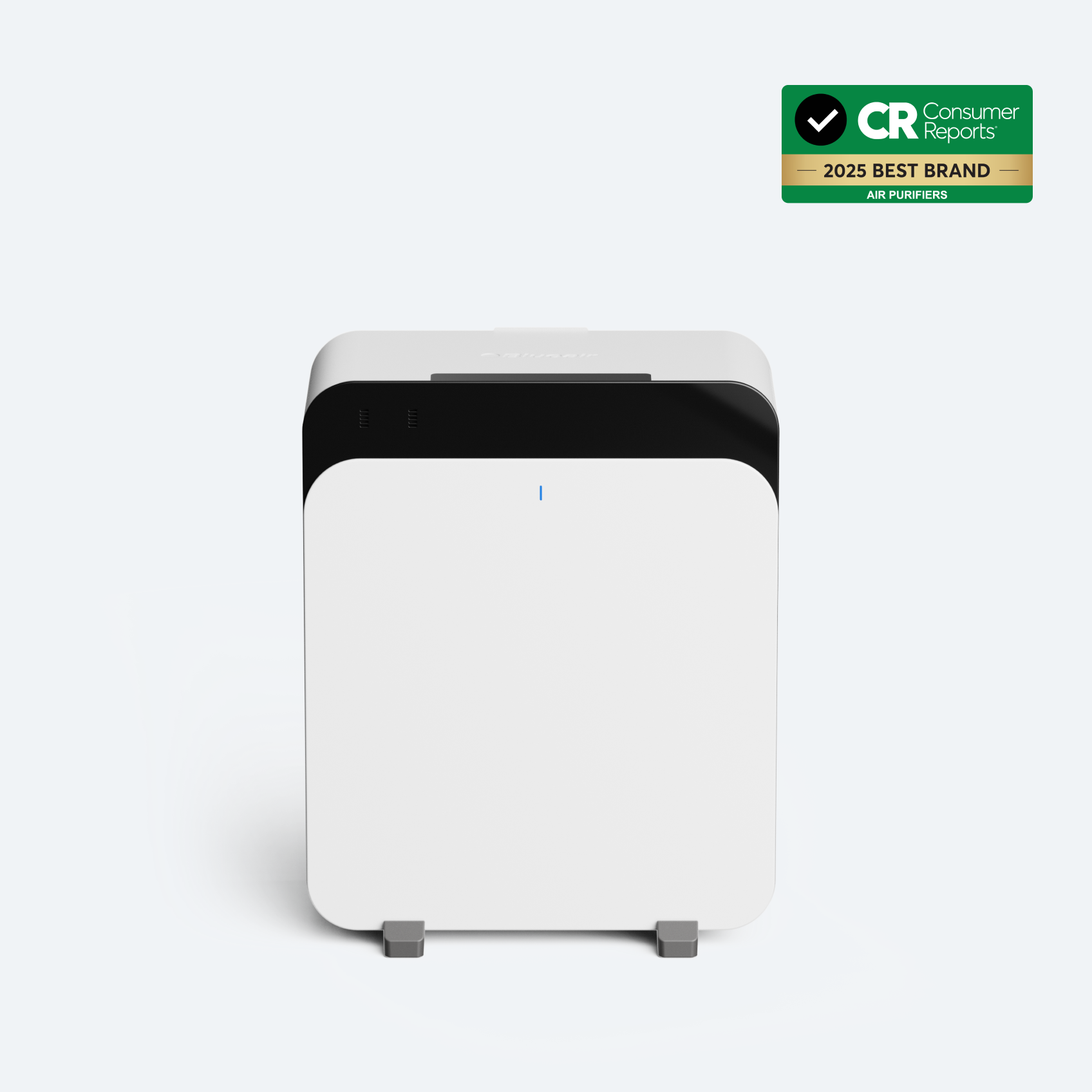
Sources: Blueair’s exact Classic Pro CP7i U.S. product page and CP7i replacement-filter listing; Blueair’s Classic Pro display guidance, Auto-mode guidance, and sensor explanation. Product imagery is a Blueair manufacturer render; it is not a photograph of a tested unit.
Key details at a glance
| Room area at 4.8 ACH (stated or calculated) | 609 sq ft |
|---|---|
| Published rated input power | 58 W |
| App control | Yes |
| Body width | 19.7 in |
| Body depth | 9.9 in |
| Body height | 23.6 in |
| Published product weight | 32 lb |
| On-unit numeric PM2.5 display | Yes |
| Separate TVOC sensor | No |
| Purifier also has a documented circulation-fan function | No |
| Built-in heating mode | No |
| Fan-driven cooling mode | No |
Use the exact model’s instructions for operating limits, supplied equipment and version differences.
Sources for this assessment
- Blueair U.S. air-purifier collection, page 1, row 25
- Blueair U.S. Classic Pro CP7i product page
- Exact Blueair Shopify offer record for Classic Pro CP7i
- Blueair Classic Pro display guidance
- Blueair Classic Pro Auto-mode guidance
- Blueair support: Classic Pro sensor measurements
- Blueair Classic Pro manual lookup page
- Exact linked U.S. Classic Pro CP7i/CP9i manual URL status
- Blueair Support Product Specs table
- Blueair Classic Pro CP7i replacement filter page
- Blueair Classic Pro CP7i replacement-filter offer record
Check the room rating against your actual space.
Compare room-area figures at 4.8 air changes per hour, then check their stated or calculated basis, placement and filter care.