
Your needs, this model
Does it fit your priorities?
Is the 200M a plausible fit for a medium room when the threshold is the 4.8-ACH area rather than its larger one-change headline?
Coway lists 361 ft² at 4.8 ACH, which clears the 358-ft² medium tier. Its 1,748-ft² figure is only at 1 ACH and does not prove the same repeated-air-change rate.
Explore this need in the finder →Does an app-free physical-control setup suit the way you want to run it?
The AP-1518R manual documents local power, speed, timer and ionizer buttons, and no app plan is documented for this exact model.
Explore this need in the finder →Is a three-color air-quality light enough, or do you require a numeric PM2.5 reading on the unit?
The 200M provides blue, dark-purple and red indicator states but no documented numeric on-unit PM2.5 display. The AP-1512N Mighty2 is a different Coway model if local numeric readings are essential.
Explore this need in the finder →Do you require a locally switchable ionizer, rather than merely an ionizer feature somewhere in the specifications?
The AP-1518R manual documents a dedicated ionizer button; it can switch that separate feature off without removing the hardware.
Explore this need in the finder →Could a compatible Pet carbon replacement be useful even though the specified Pet Allergy Filter is not included?
Coway separately offers a Pet deodorization replacement profile for the 200M filter family. This is an optional replacement, not proof that the named Pet Allergy Filter with ARC Formula is included in the standard offer.
Explore this need in the finder →Can the product page's pollutant-labelled CADR values meet your hard minimum in CFM?
No. The reviewed 246/249/277 table supplies no unit. The manual's 287.8 ft³/min maximum-air-volume figure is a different specification, so generic CADR in CFM remains unknown.
Explore this need in the finder →Is the advertised 1,748-square-foot room figure enough to satisfy a 606-square-foot requirement at 4.8 ACH?
No. That headline is tied to one air change per hour. At the requested 4.8-ACH comparison rate, Coway lists 361 ft², so an essential 606-ft² floor is not met.
Explore this need in the finder →Can a strict body depth or weight limit safely use one of the two published measurements?
No. Page and manual disagree on depth (9.6 vs 9.37 in) and weight (12.3 vs 13.2 lb), so both remain unknown for hard-fit matching.
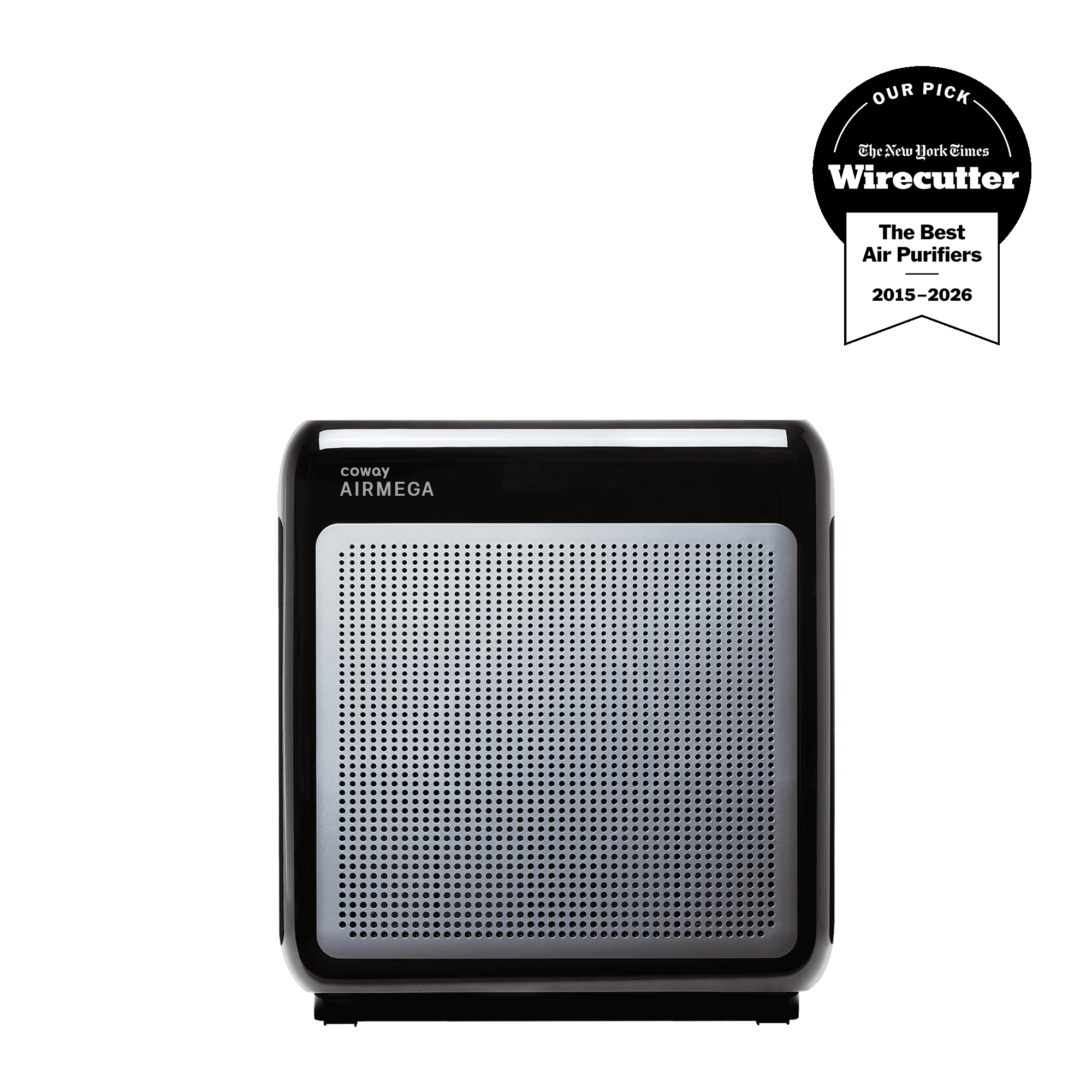
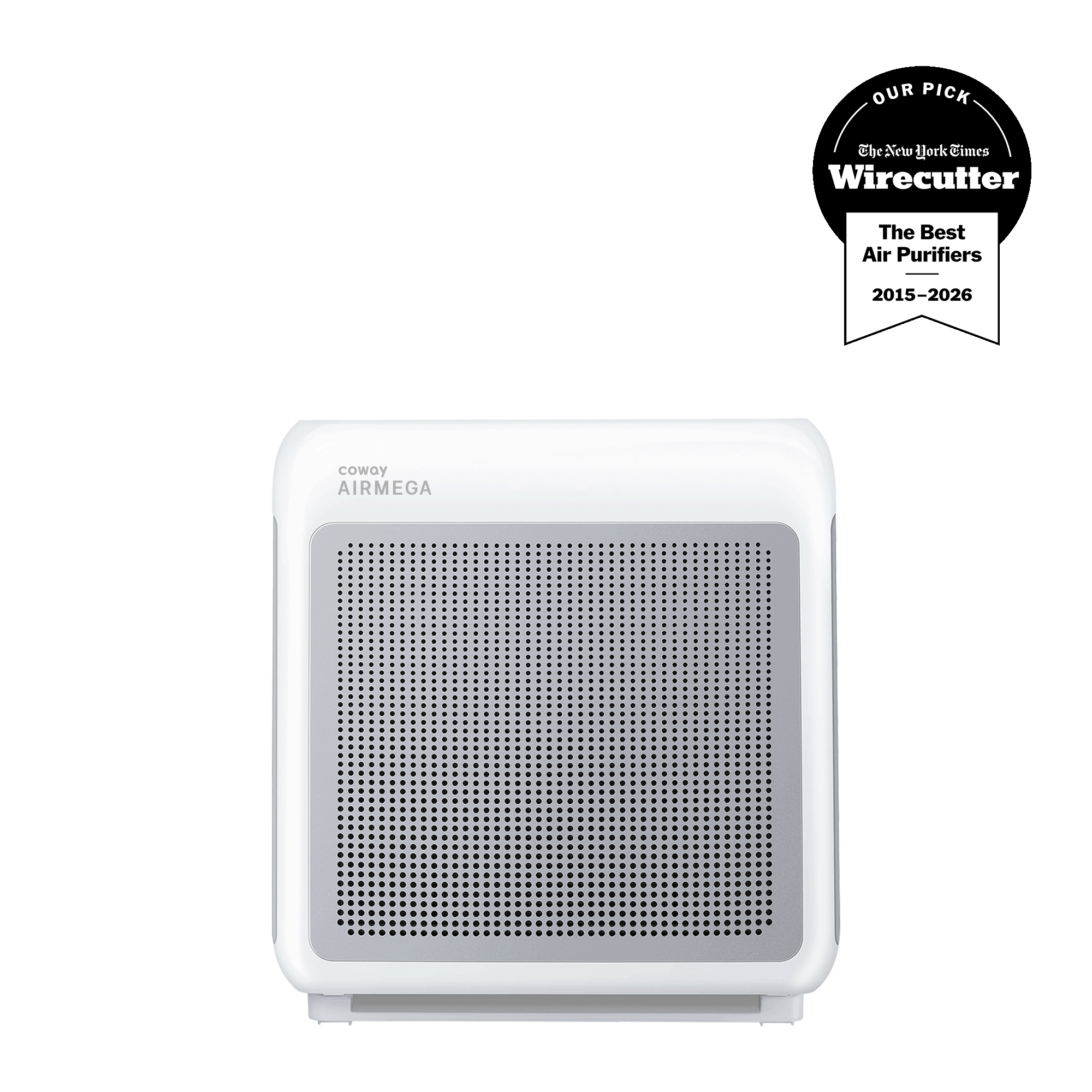
Explore this need in the finder →The Coway Airmega 200M is a straightforward, button-controlled purifier for a bedroom or other enclosed room around 361 square feet when you compare models at the maker’s stated 4.8 air changes per hour. Its appeal is not an app, a numeric particle readout, or a special pet package. It is the simpler combination of sensor-led Auto, three manual fan speeds, a washable pre-filter, a replaceable carbon/HEPA filter set and a separately switchable ionizer. The exact U.S. model is AP-1518R, with white AP-1518R(W) and black AP-1518R(B) offers.
Use the repeated-air-change figure, not the largest headline
Coway lists the 200M at 361 square feet for 4.8 air changes per hour, 874 square feet at two changes, and 1,748 square feet at one. Those are different operating-rate comparisons, not interchangeable room promises. If your minimum is the 358-square-foot medium tier in this guide, the published 4.8-ACH number clears it narrowly. A 606-square-foot large-room requirement does not fit this one-unit plan. The rating is the manufacturer’s figure, not a measurement in your room; an open doorway, tall ceiling, blocked outlet or low quiet-speed use can alter what you experience. Keep the manual’s 20-centimeter side spacing and 30–60-centimeter top clearance rather than measuring only the cabinet.
The product page labels smoke, dust and pollen CADR as 246, 249 and 277, respectively, but the inspected table does not give a unit. I therefore leave generic CFM CADR unknown. The manual’s 287.8-cubic-feet-per-minute maximum-air-volume figure is not identified as CADR and cannot fill that gap. If a hard minimum in CADR CFM is essential, do not count this model on the basis of the ununitized numbers.
Local controls are the point; feedback stays color-coded
The AP-1518R manual describes physical buttons for power, speed, ionizer and timer. Auto uses the dust sensor to select speeds one through three; you can instead choose those speeds yourself. Eco has a different job: after 30 minutes without detected pollution, it turns the fan off and starts again when pollution is detected. That can reduce unnecessary running, but it is not continuous circulation. The timer offers one, four or eight hours. A blue, dark-purple or red light communicates the unit’s air-quality status; the manual does not document a numeric PM2.5 value on the purifier, and the exact model has no app plan here. If a live number is a must, look instead at Coway’s Mighty2 AP-1512N, whose reviewed plan includes numeric particle readings. If a no-app physical control setup is the priority, the 200M is a more natural fit.
The separate ionizer has a local on/off control, so it is possible to run the filtration unit without that feature. That does not mean the ionizer hardware is removed, and an on/off switch is not an ozone measurement. The official page’s filtration copy is inconsistent: one passage calls the system four-stage while its diagram says three-stage. The manual separately identifies three replaceable media—the washable pre-filter, deodorization filter and HEPA filter—and the ionizer is a separate feature, not one of those replacement filters. That description is the useful one when planning upkeep.
Expect a recurring filter routine, not a maintenance-free box
Clean or vacuum the pre-filter every two to four weeks, let it dry fully if washed, and clean the particle sensor and air inlets/outlets about every two months. The manual recommends replacing the deodorization filter every six months and HEPA every year under its stated use basis of eight hours a day at maximum speed; actual life varies with air and use. A filter-reset reminder is not proof that every household will need a cartridge on exactly the same date. Coway sells compatible replacement deodorization profiles—Fresh Starter, Allergen, Intense Smoke and Pet—for the 200M/1512HH family. These are separate replacement options, not all included at purchase. In particular, choosing a later Pet carbon profile is different from requiring the specifically named Pet Allergy Filter with ARC Formula in the standard package; the page does not document that named filter as included.
What the model code and published dimensions do—and do not—settle
The current Coway page and product-linked manual identify AP-1518R, while the product record lists two real finish offers, white and black. That is a genuine model family, not an Airmega 200M name to collapse into the AP-1512HH just because both share the same replacement-filter family. The page gives a 16.8-inch width and 18.3-inch height, which agree with the manual. Depth and weight do not: the page gives 9.6 inches and 12.3 pounds; the manual gives 9.37 inches and 13.2 pounds. Treat both as unknown for a tight cabinet or weight limit instead of selecting whichever number looks convenient. The page lists 82 watts and 24.4–55.1 dB(A); those can help compare the published specification, but sound varies by setting and placement.
Choose the 200M if you want an uncomplicated, no-app routine, an automatic dust response you can override, a switch for the ionizer and a medium-room rating that is explicitly stated at 4.8 ACH. Skip it for app scheduling, numeric on-unit PM2.5, a proven generic-CFM threshold, a room over the rated repeated-rate area, or a strict depth/weight cutoff. For the same general Coway family, check the AP-1512HH review for its exact identity and page/manual discrepancies; step to the Mighty2 if local numeric readings matter more than this simpler control/display setup. No purifier can make a room fit by quoting its slower one-change headline.
Sources: Coway Airmega 200M AP-1518R product page; AP-1518R owner’s manual; Coway AP-1518R/AP-1512HH replacement filter options.
Key details at a glance
| Room area at 4.8 ACH (stated or calculated) | 361 sq ft |
|---|---|
| Published room area at 1 air change per hour | 1748 sq ft |
| Room area at 2 ACH (stated or calculated) | 874 sq ft |
| Published rated input power | 82 W |
| App control | No |
| Body width | 16.8 in |
| Body height | 18.3 in |
| On-unit numeric PM2.5 display | No |
| Included Pet Allergy Filter with ARC Formula | No |
| On-unit lock for accidental control changes | No |
| Turbo fan setting | No |
| Automatic pre-filter scraper and dust tray | No |
| Manufacturer filter-check/replacement guidance | Manual: clean/wash or vacuum pre-filter every 2–4 weeks; clean the particle sensor and air inlet/outlet about every 2 months; replace deodorization filter about every 6 months and HEPA filter about every year under an 8-hours/day at maximum speed basis. Real interval depends on use and environment. |
| Important specification note | Direct rate-specific areas are 361/874/1,748 ft² at 4.8/2/1 ACH. Product-page CADR figures lack a unit in the inspected table; generic CFM remains unknown. Product page/manual depth and weight conflict, so strict-fit matching excludes those fields. |
| Placement and care | A recurring washable pre-filter task is part of ownership. Plan clearance around intake/outlet, not just the cabinet dimensions. Eco stops the fan after a clean-sensor interval; select a numbered speed if you need continuous fan operation. |
| Built-in bipolar ionizer | Yes |
| Local ionizer on/off control | Yes |
Use the exact model’s instructions for operating limits, supplied equipment and version differences.
Sources for this assessment
Check the room rating against your actual space.
Compare room-area figures at 4.8 air changes per hour, then check their stated or calculated basis, placement and filter care.