
Your needs, this model
Does it fit your priorities?
Will the HPA120’s 110-sq-ft 4.8-ACH area rating cover a personal room but fall short of the next compact tier?
The comparable repeated-cleaning figure is 110 sq ft at 4.8 ACH, not the distinct 530-sq-ft one-change headline.
Explore this need in the finder →Do I want physical, no-app settings rather than a phone-controlled purifier?
The HPA120 page and manual document local speeds, Sleep and a timer; ENERGY STAR lists no connected capability.
Explore this need in the finder →Will its 6.92-inch body width fit a tight tabletop spot before I allow operating clearance?
The listed body width is 6.92 inches; a 7-inch body cap fits while 6.5 inches does not, before clearance.
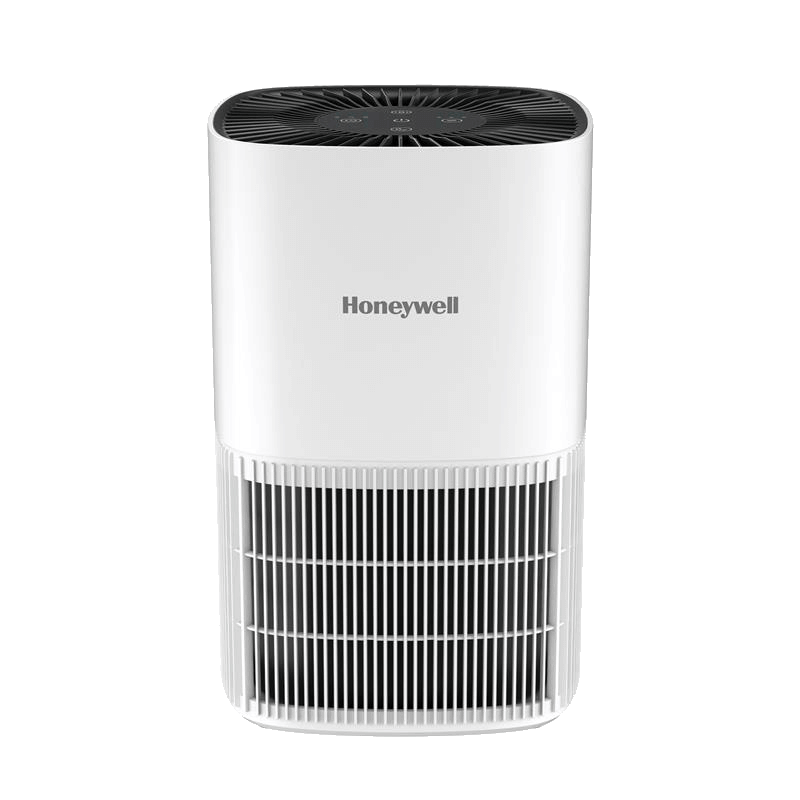
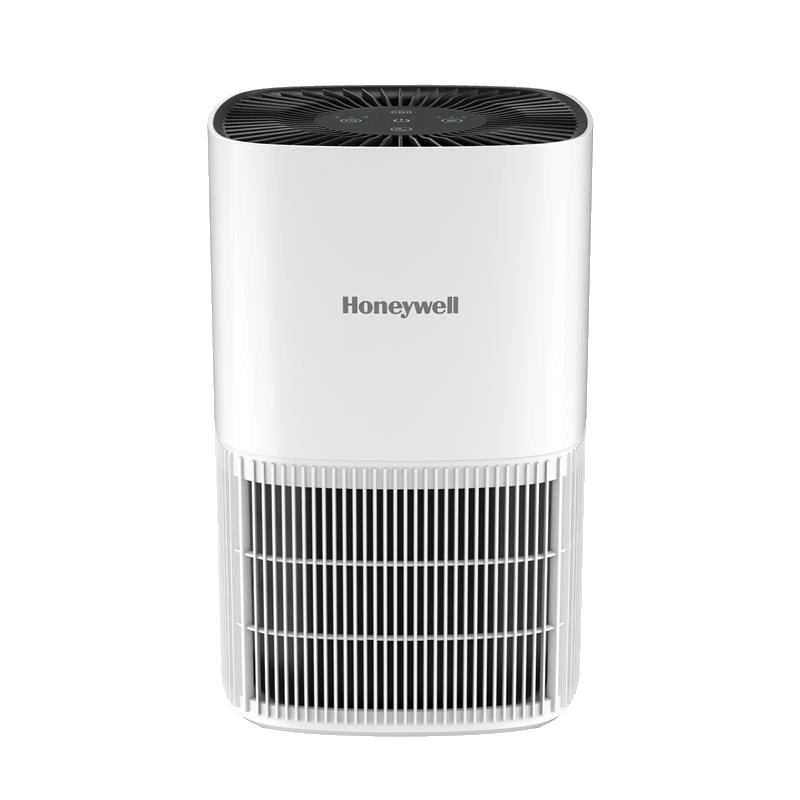
Explore this need in the finder →The Honeywell Allergen Plus HPA120 is a tabletop purifier for a small, enclosed room where a short footprint and straightforward physical controls matter more than air-quality readouts. Its useful comparison number is 110 square feet at 4.8 air changes per hour. Honeywell also advertises 530 square feet at one air change per hour, but those are different cleaning rates; the slower figure should not be treated as equivalent for a room where frequent particle turnover is the goal.
Keep the room figure tied to its rate
The HPA120 is marketed for small to medium rooms, yet the room-size values tell a more practical story. Honeywell says its AHAM Verifide performance reaches 4.8 changes an hour in 110 square feet. ENERGY STAR’s HPA120*** entry likewise lists a 110-square-foot room size. That fits a personal-area threshold but falls short of a 140-square-foot compact-room requirement in our comparison. A closed bedroom or office below the stated area is a more sensible match than a large shared living area.
The 530-square-foot headline uses one air change per hour, a much slower rate. It is useful to understand the manufacturer’s claim, but it is not a substitute for the 4.8-ACH number when comparing recurring cleaning. Open doors, high ceilings and room layout can also reduce how closely any published area corresponds to actual circulation. If the room is above 110 square feet and needs a stronger repeated-cleaning basis, compare a larger purifier rather than stretching the slower figure.
A single replacement cartridge keeps the routine simple
The HPA120 uses one O cartridge, model HRFO1, which combines a vacuumable pre-filter, HEPA material and activated carbon. Honeywell says the HEPA layer captures at least 99.97 percent of particles 0.3 microns and larger that pass through the filter; this is a filter claim, not a guarantee that every particle in a room will pass through the machine. The carbon layer is intended to reduce household odors, while the pre-filter catches larger dust and hair.
The manual recommends vacuuming the outside pre-filter every two to four weeks, or as needed. Replace the complete cartridge on a nine-to-twelve-month guideline; heavy particle loads can shorten useful life. The main filter is not washable. This is easy to remember, but it is not a permanent-filter design: plan for a replacement cartridge rather than expecting to clean and reuse the HEPA media.
Manual controls, not sensor feedback
HPA120 has three cleaning speeds, a filter-check light, an auto-off timer with two-, four- and eight-hour settings, and a Sleep mode that drops to the lowest speed and dims the control lights. The page lists HPA120B and HPA120W. The linked manual identifies the HPA120 Series and does not describe AQSense, automatic air-quality response or a color indicator. ENERGY STAR also lists no connected capability and no automatic mode. If you want the fan to react to particles without input, or want to see air quality on the housing, this is the more basic choice between the HPA120 and HPA125.
Its body measures 6.92 inches wide and deep and 10.94 inches high. A narrow shelf may fit the footprint, but the manual still calls for more than six inches from the nearest wall or furniture and unobstructed intake and outlet grilles. It must stand upright on a stable, level surface and plug directly into a wall outlet, not an extension cord or power strip. Honeywell gives a five-year limited warranty. A specific maximum noise level is not published in the sources checked, so “whisper quiet” wording cannot answer a strict decibel limit.
Who should compare it with a bigger model?
For a simple purifier in a personal room, HPA120’s compact body, no-app operation and shared O-filter routine are the strongest reasons to shortlist it. ENERGY STAR reports a 71-CFM smoke CADR, 79 CFM for dust and pollen, a 75-CFM PM2.5 CADR, an integrated energy factor of 6.1 and 72 kWh annual use for its wildcard HPA120 record. These are certification-program values, not measurements made by this site. They put a number behind the small-room comparison but do not make it a large-room device.
The HPA125 occupies almost the same tabletop footprint and shares the HRFO1 filter, while adding manufacturer-page claims for a color air-quality indicator and AQSense Auto. That may appeal if color feedback is helpful, though the exact Auto claim needs more documentary clarity. If a 140-square-foot or larger 4.8-ACH target matters, the older Honeywell HPA4100 is a wider and taller option rated at 169 square feet, but it uses the separate HRFY1 cartridge and does not have a documented Auto feature. HPA120 is easiest to recommend when the room really is small and simple manual operation is what you want.
Sources: Honeywell HPA120 product page, HPA120 Series owner’s manual, Honeywell HRFO1 filter page, and ENERGY STAR HPA120*** record. Specifications describe source claims and certification data, not independent testing by this site.
Key details at a glance
| Room area at 4.8 ACH (stated or calculated) | 110 sq ft |
|---|---|
| Published room area at 1 air change per hour | 530 sq ft |
| Clean air delivery rate (CADR) | 71 CFM |
| App control | No |
| Body width | 6.92 in |
| Body depth | 6.92 in |
| Body height | 10.94 in |
| On-unit numeric PM2.5 display | No |
| On-unit lock for accidental control changes | No |
| Turbo fan setting | No |
| Manufacturer filter-check/replacement guidance | One included HRFO1 all-in-one filter has a 9–12-month guideline; the manual says high particle loads can shorten useful life. A separate product-filter page has one inconsistent “9–12 years” line while its main text and manual say months; months is used. |
| Purifier also has a documented circulation-fan function | No |
| Built-in heating mode | No |
| Fan-driven cooling mode | No |
| Cooling mode is air conditioning | No |
| Built-in humidification mode | No |
| Separate adjustable fan in exact offer | No |
Use the exact model’s instructions for operating limits, supplied equipment and version differences.
Sources for this assessment
- Honeywell U.S. room air purifier directory page 1
- Honeywell exact U.S. product page for HPA120
- Honeywell HPA120 Series owner’s manual A009662R0 r10
- Honeywell HPA120/HPA125 tabletop filter finder
- Honeywell Replacement 3-in-1 O Filter HRFO1
- ENERGY STAR exact room-air-cleaner record for HPA120
- ENERGY STAR current qualified-product dataset with exact HPA120*** and HPA125** rows
- CPSC narrow exact-name recall query for HPA120
- Official Honeywell HPA120 product-image candidate (bytes unavailable)
- Exact Honeywell Plugged In HPA120W product image
- Honeywell owner manual archive
Check the room rating against your actual space.
Compare room-area figures at 4.8 air changes per hour, then check their stated or calculated basis, placement and filter care.