
Your needs, this model
Does it fit your priorities?
Will the HPA125’s 110-sq-ft 4.8-ACH rating satisfy a personal-room target but miss a 140-sq-ft compact-room threshold?
The exact model record supports 110 sq ft at the 4.8-ACH comparison rate; the 530-sq-ft label is a separate 1-ACH figure.
Explore this need in the finder →Is the HPA125’s green/yellow/red indication useful if I do not need numeric PM2.5?
Honeywell’s product page states color-coded feedback, but not a numeric PM2.5 value on the unit.
Explore this need in the finder →Will the small 6.92-inch body width fit a narrow tabletop position with operating clearance left around it?
Published width is 6.92 inches: it fits a 7-inch body cap, not a 6.5-inch cap, before clearance.
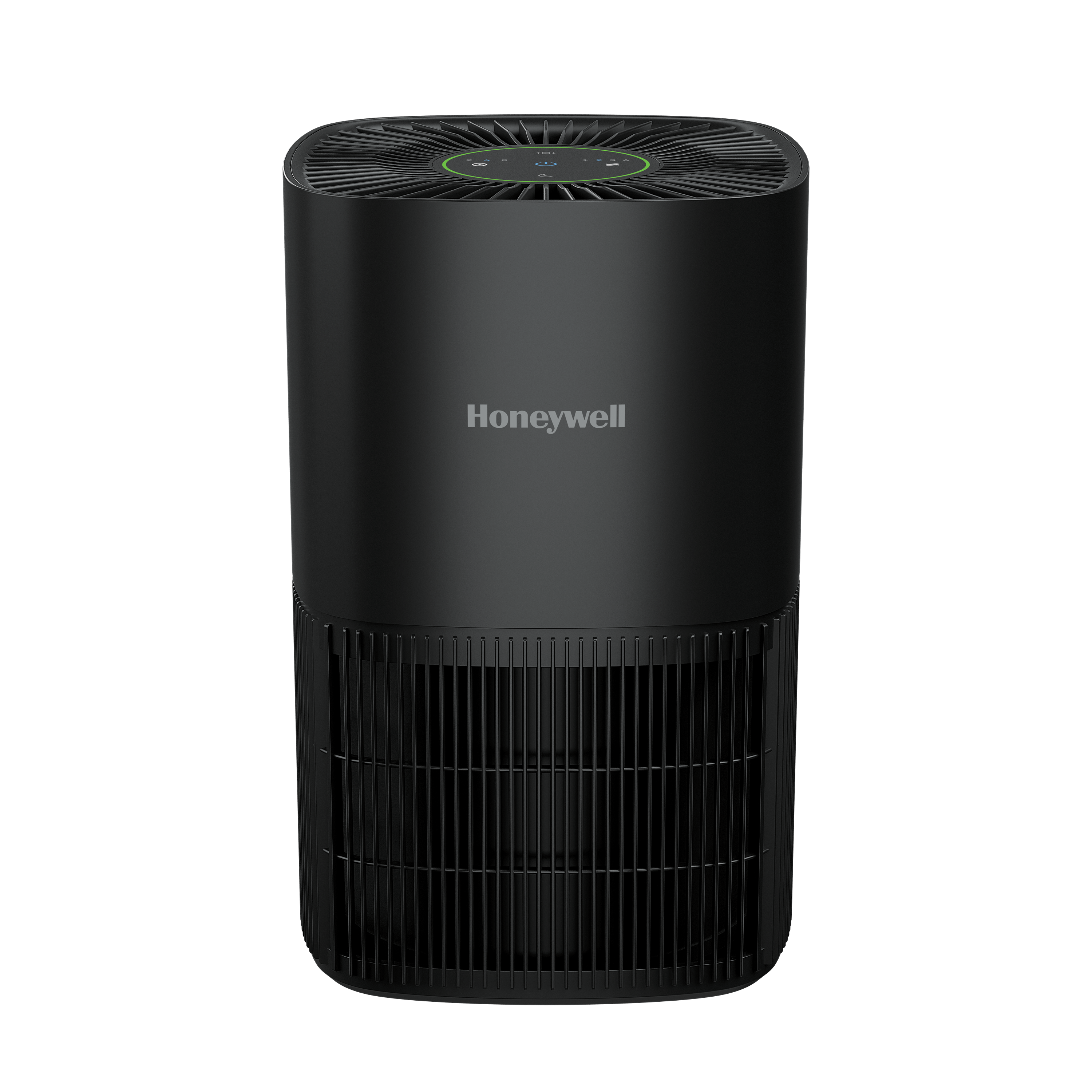
Explore this need in the finder →The Honeywell Allergen Plus HPA125 is a small tabletop HEPA purifier whose unusual selling point is a color air-quality indicator and an advertised AQSense automatic mode. Its repeated-cleaning room rating is modest: 110 square feet at 4.8 air changes per hour. The “530 square feet” statement is a separate one-change-per-hour figure, not a larger room rating at the same intensity. The product page’s AQSense claim also deserves closer scrutiny because the manual it links and the ENERGY STAR record do not agree with it.
A personal-room purifier with a slow-rate headline
Honeywell lists a 110-square-foot room at 4.8 ACH for the HPA125, and ENERGY STAR’s HPA125** record lists the same room size. That is enough for the personal-room tier used in our comparison, but not the next compact category, which starts at 140 square feet. The separate 530-square-foot line is explicitly one air change per hour. If frequent cleaning in a larger room is the essential need, don’t use the slower headline as a stand-in for the 110-square-foot 4.8-ACH figure.
It is very small: the published body is 6.92 inches wide and deep and 10.94 inches high. The small dimensions help with a bedside table, desk or narrow corner, but they do not change the modest room rating. The product page links an owner’s manual, but the PDF itself is titled for the HPA120 Series and does not mention HPA125. It cannot establish HPA125-specific placement clearances. Measure the body fit separately from operating clearance and follow the instructions supplied with the exact unit.
Filter and nighttime routine
HPA125 shares its O filter with HPA120. Honeywell lists the exact HPA125 finish identifiers as HPA125B in black, HPA125V in gray and HPA125W in white. One HRFO1 cartridge combines the vacuumable pre-filter, HEPA layer and activated carbon; the product box includes the initial O filter. Honeywell’s HRFO1 filter information gives a nine-to-twelve-month replacement guideline, and the HPA125 product page identifies the pre-filter as vacuumable. No HPA125-specific vacuuming interval or cartridge-handling instruction is established by the linked HPA120 Series manual, so do not borrow its timing for this model; use the exact unit’s supplied instructions.
Honeywell says its Sleep mode can operate “as low as 20.81 dBA” and dims the lights. That is a low-setting claim, not the maximum noise over all speeds or an independent sound measurement. A maximum decibel value is not established, so shoppers with a strict sound cap should not treat the low Sleep figure as an answer to that different question. A five-year limited warranty is listed; routine filter replacement remains a separate ownership expense.
Color feedback is not a particle number
The product page describes a green/yellow/red air-quality indicator and says the AQSense sensor changes the fan speed automatically. Color feedback can provide a quick cue without displaying a concentration, but it is not a numeric PM2.5 readout. More importantly, the page links a manual titled for the HPA120 Series; its cover, controls and approval page do not mention HPA125, so it cannot confirm HPA125’s controls. ENERGY STAR’s exact HPA125** row lists “Automatic Mode: None,” while the product page advertises AQSense Auto and a built-in air-quality sensor. Until Honeywell supplies an HPA125-specific control document or reconciles those sources, I would not select this model when automatic sensing is essential. This is a documentation conflict, not proof that the distinct HPA125 offer is a different or nonexistent product. The color-indicator claim is stated separately from that unresolved operating mode.
The energy record lists a 110-square-foot room, 71 CFM smoke CADR, 79 CFM dust and pollen CADR, 75 CFM PM2.5 CADR, a 6.1 integrated energy factor and 72 kWh annual use. These are ENERGY STAR certification values, not tests conducted here. The rating is useful for comparing a small room, not for interpreting the sensor or predicting room-level results.
Where it fits in the tabletop range
Shortlist HPA125 if you want a compact purifier, manual settings and a visible color indicator, and are comfortable treating the AQSense behavior as a question to resolve from the exact unit’s manual. HPA120 is the close alternative when you prefer a less complicated manual-only model without color feedback; it has the same published body dimensions, room rating and HRFO1 filter. The HPA125’s manufacturer-page claim to Auto is not enough to make it a safe essential-Auto recommendation while the linked manual and certification listing say otherwise.
For a room that needs a stronger 4.8-ACH basis, the HPA4100 offers a 169-square-foot rating and different HRFY1 cartridge, though it is broader and does not document AQSense Auto. If color-coded status is adequate but numeric particle concentration is a must, none of these three Honeywell tabletop/tower choices is a confirmed answer. HPA125 is most compelling when its space-saving form and easy-to-read color cue matter more than its unresolved sensor-mode description.
Sources: Honeywell HPA125 product page, the HPA120 Series manual linked from Honeywell’s HPA125 page (the PDF does not identify HPA125; applicability unresolved), Honeywell tabletop filter finder, Honeywell HRFO1 filter page, and ENERGY STAR HPA125** record. The low-noise wording is a manufacturer claim, not an independent sound test.
Key details at a glance
| Room area at 4.8 ACH (stated or calculated) | 110 sq ft |
|---|---|
| Published room area at 1 air change per hour | 530 sq ft |
| Clean air delivery rate (CADR) | 71 CFM |
| App control | No |
| Body width | 6.92 in |
| Body depth | 6.92 in |
| Body height | 10.94 in |
| On-unit numeric PM2.5 display | No |
| On-unit lock for accidental control changes | No |
| Turbo fan setting | No |
| Manufacturer filter-check/replacement guidance | The official HRFO1 product/filter information repeatedly recommends a 9–12-month guideline and has one inconsistent “9–12 years” line. Use months as the repeated exact-filter guidance; HPA125-specific manual applicability remains open. |
| Purifier also has a documented circulation-fan function | No |
| Built-in heating mode | No |
| Fan-driven cooling mode | No |
| Cooling mode is air conditioning | No |
| Built-in humidification mode | No |
| Separate adjustable fan in exact offer | No |
Use the exact model’s instructions for operating limits, supplied equipment and version differences.
Sources for this assessment
- Honeywell U.S. room air purifier directory page 1
- Honeywell exact U.S. product page for HPA125
- Honeywell HPA120 Series owner’s manual A009662R0 r10
- Honeywell HPA120/HPA125 tabletop filter finder
- Honeywell Replacement 3-in-1 O Filter HRFO1
- ENERGY STAR exact room-air-cleaner record for HPA125
- ENERGY STAR current qualified-product dataset with exact HPA120*** and HPA125** rows
- CPSC narrow exact-name recall query for HPA125
- Official Honeywell HPA125 product-image candidate (bytes unavailable)
- Exact Honeywell Plugged In HPA125B product image
- Honeywell owner manual archive

Check the room rating against your actual space.
Compare room-area figures at 4.8 air changes per hour, then check their stated or calculated basis, placement and filter care.