
Your needs, this model
Does it fit your priorities?
Will the Airmega 150 meet a 140-square-foot repeated-cleaning room need?
The exact US page rates the AP-1019C at 214 ft² at 4.8 ACH, so it meets the compact tier but not a 219-ft² small-room threshold. Its 1,035-ft² headline is only a one-air-change-per-hour figure.
Explore this need in the finder →Can I see a numeric PM2.5 reading on the Airmega 150 itself?
No numeric value is documented. The unit provides a four-level color air-quality indicator and its particle sensor adjusts Auto mode; it is not a PM2.5 number display.
Explore this need in the finder →Can I avoid app setup and still use automatic fan adjustment?
Yes. The unit has physical buttons for Auto and speeds 1–3; its particle sensor changes Auto speed. The exact product page/manual do not document app or Wi-Fi controls.
Explore this need in the finder →Can I use particle-responsive Auto mode without app or Wi-Fi setup?
Yes. The Airmega 150 offers Auto and speeds 1–3 from physical controls; the sensor adjusts Auto mode. Its exact US product page/manual do not document a companion app or Wi-Fi controls.
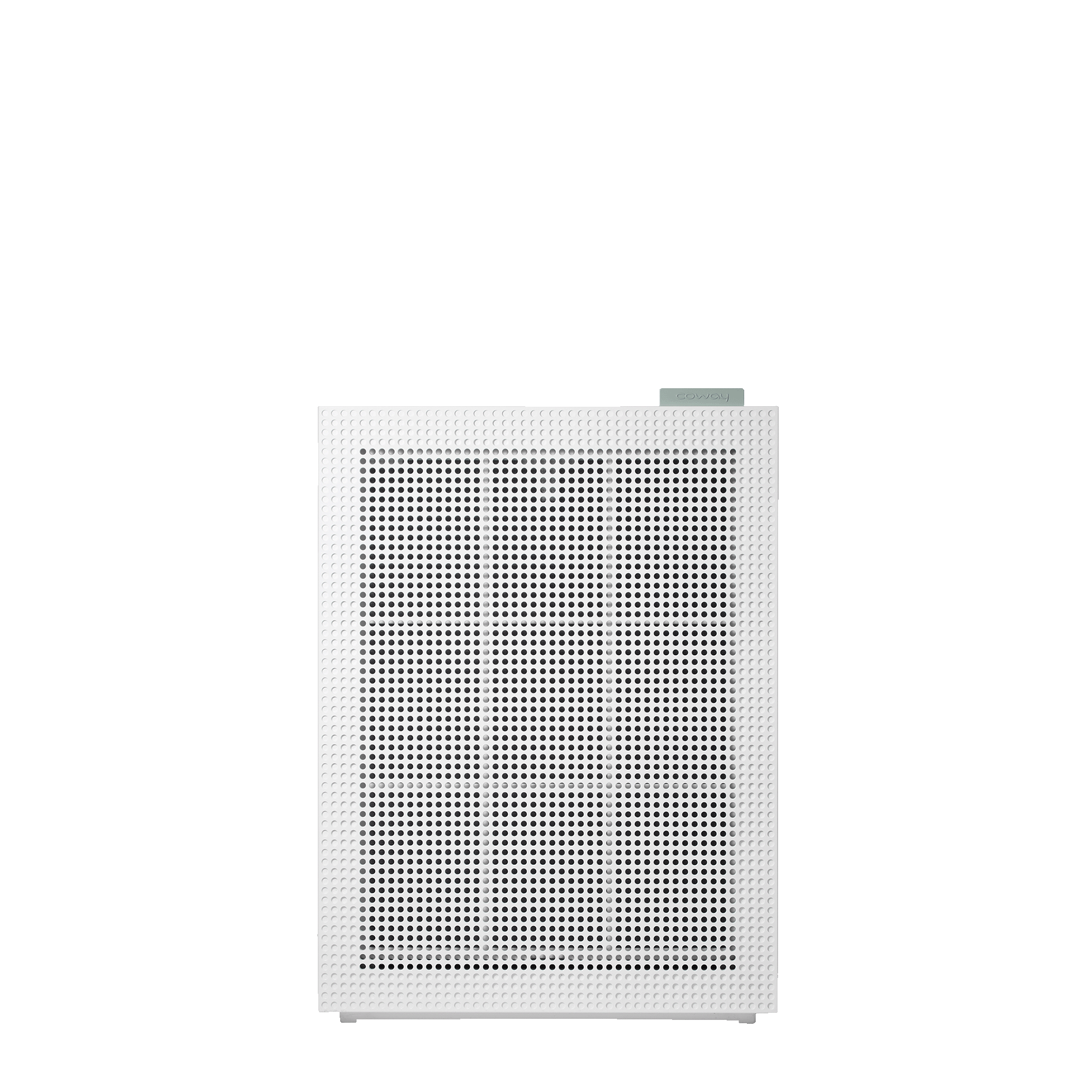
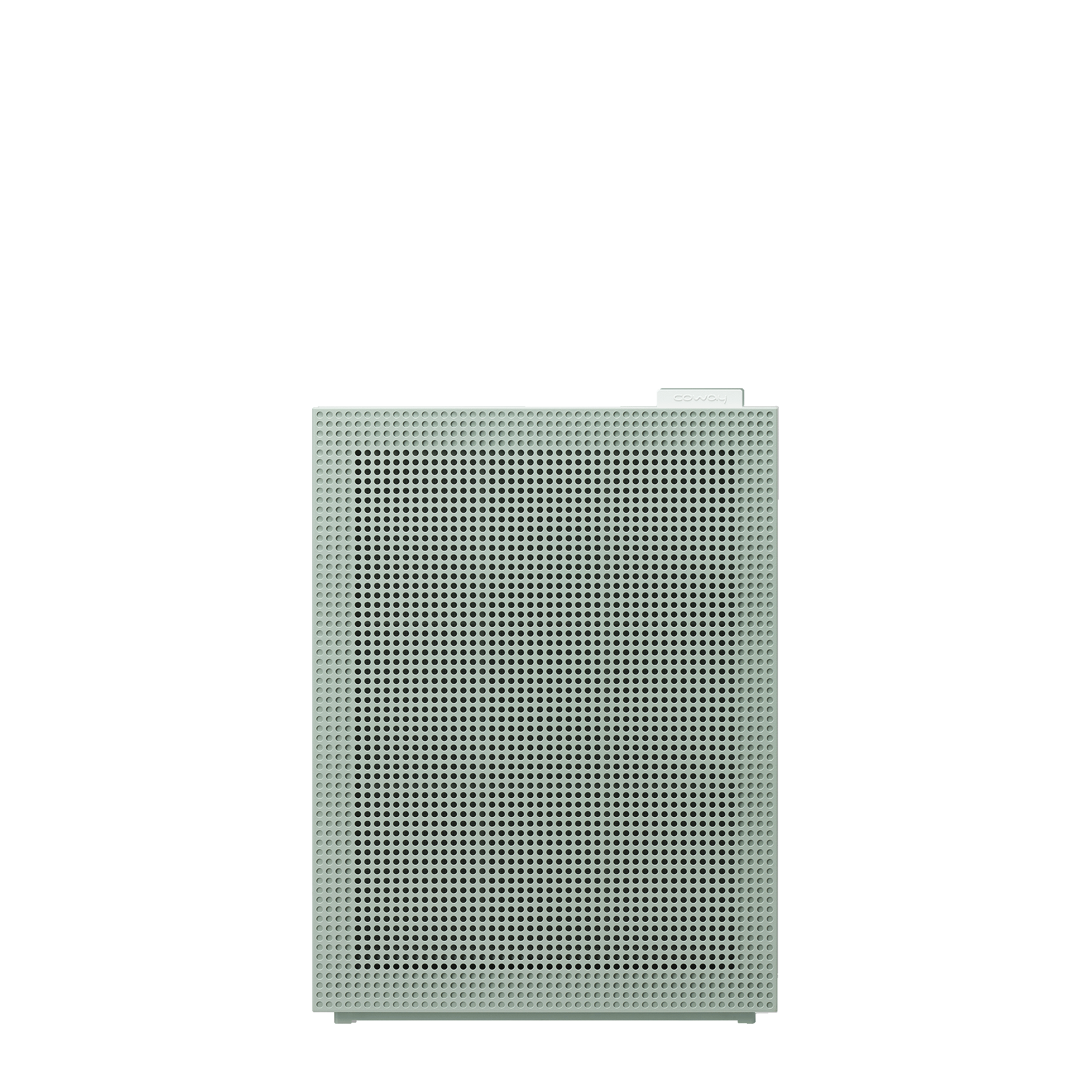
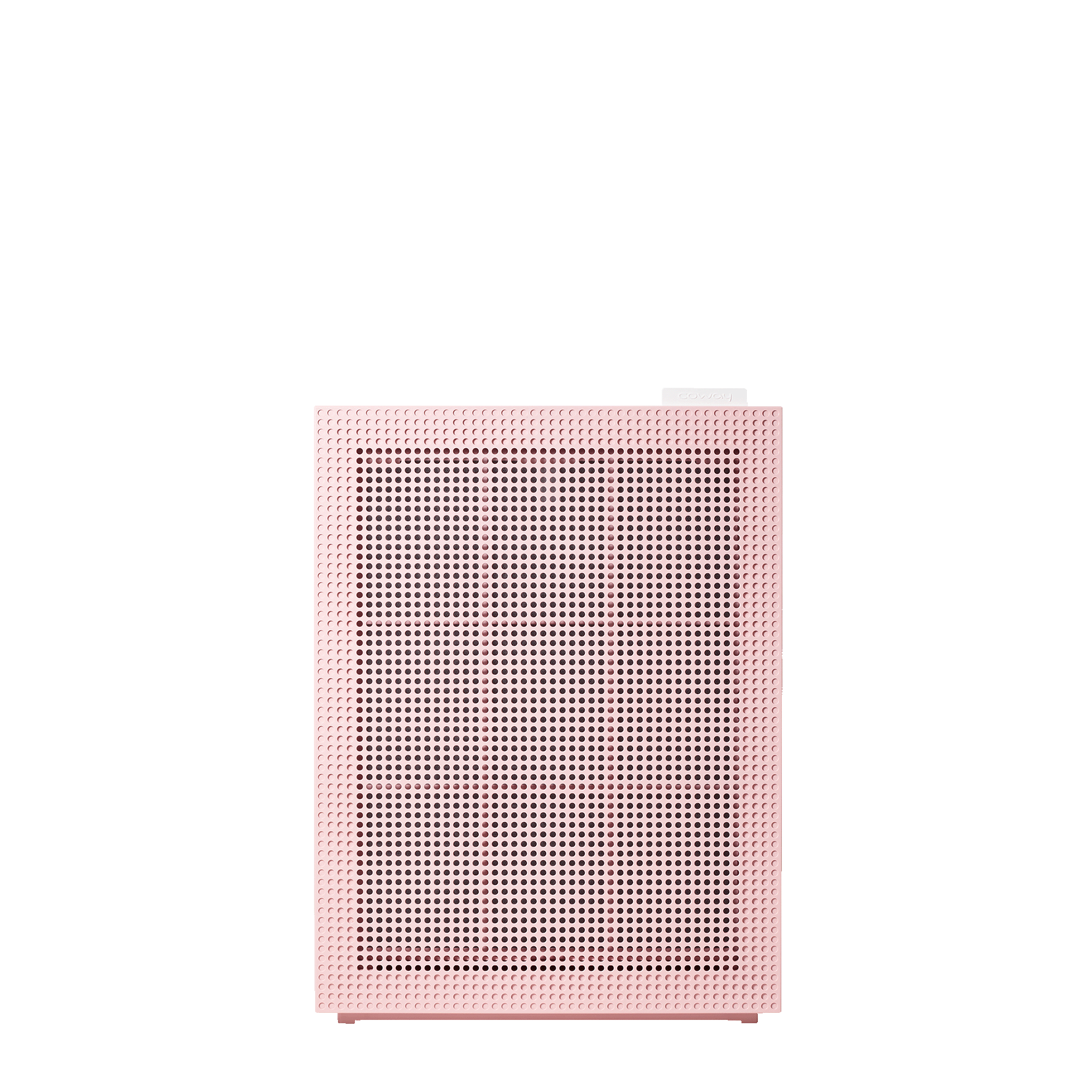
Explore this need in the finder →The Coway Airmega 150 is a slim, front-intake purifier with an unusually useful balance for someone who wants automatic particle-responsive airflow but does not want a Wi-Fi app. Its exact US product page identifies the family as Airmega 150, while its linked manual covers AP-1019C and its W/K/P finish variants. The current offers are Dove White (SKU 826439000370), Sage Green (826439000387), and Peony Pink (826439000424); the first two were listed available and pink unavailable when checked. No separate room rating or operating mode is documented by color.



Use the repeated-cleaning rating, not the headline
Coway publishes 214 square feet at 4.8 air changes per hour, 518 square feet at 2 changes per hour, and 1,035 square feet at one change per hour. The broad 1,035-square-foot number is a one-change rating; it is not a fast-cleaning substitute for the 214-square-foot 4.8-ACH figure. For a room-size question, use the latter and consider whether the actual room is enclosed, how high its ceiling is, and whether doorways add adjoining volume. The matcher treats 214 square feet as a confirmed repeated-cleaning maximum—not as a promise that every larger open plan will perform the same way.
The manufacturer lists separate CADR readings of 153 CFM for smoke, 161 for dust, and 220 for pollen. Those are pollutant-specific figures, not one universal 220-CFM rate. The current finder asks for a single minimum CADR, so it does not treat this model as having a verified single value for that constraint. This matters if you are choosing around smoke rather than pollen.
Automatic airflow without app dependence
Air enters through the broad front panel and leaves through the top. A particle sensor and four-level color air-quality indicator support Auto mode; the sensor changes fan operation among levels 1, 2, and 3. The manual also describes a high, standard, or low sensor-sensitivity setting, a useful adjustment if the indicator seems unusually reactive or slow. The color light can be switched off while the purifier keeps running. It is a general air-quality signal, not a numeric PM2.5 measurement.
All everyday controls are on the unit. You can use Auto or select speeds 1–3 directly, and the manual does not document app pairing, Wi-Fi, schedules, remote control, or a numeric particle display. That makes the Airmega 150 a sensible pick for someone who wants sensor-responsive operation but prefers a simple local interface; it is a poor match if phone control or a precise PM2.5 number is essential.
Routine care is part of the ownership plan
Filtration is a pre-filter for larger dust, mold, hair, and pet hair; a deodorization filter; and a HEPA filter. The pre-filter is removable and washable, but Coway asks users to clean it every two to four weeks. The manual recommends replacing the deodorization filter every six months and the HEPA filter every year, based on eight hours per day at speed 2; dustier rooms or longer operation can change the interval. The product page’s general “up to 6–12 months” summary does not replace those separate stage-specific instructions. Indicator lights call attention to cleaning or replacement, but they do not eliminate the routine inspection or prove a measured remaining filter capacity.
For installation, remove the new filters’ plastic packaging, place the deodorization filter ahead of the HEPA filter, and close the front cover fully. The washable pre-filter can be vacuumed or rinsed, then must dry completely before reinstalling; do not wash the deodorization or HEPA filters. The manual also calls for cleaning the particle-sensor inlet, outlet, and lens about every two months. These are manageable tasks, but this is not a sealed, maintenance-free box.
Plan for clearance, not just the cabinet
The listed body is 13.4 inches wide, 18.5 inches high, and 6.5 inches deep, at 12.1 pounds. Its shallow depth helps it sit near a wall, but the manual still says to leave at least 20 centimeters on each side and keep it unblocked; it also asks for two meters between the purifier and televisions or other electronics. That clearance can matter more than the narrow body measurement in a bedroom corner. The unit is specified for a grounded 120-volt, 60-Hz outlet and indoor household use.
Compare it with the Levoit Core 300-P if you need a larger small-room rating and want direct controls; that model’s manufacturer page lists 222 square feet at 4.8 ACH, while the Airmega 150 stops at 214. For an app-connected model, the Core 300S-P adds connected controls, but app convenience is a genuine operating difference rather than a purifier-capacity claim. Choose the Airmega 150 when its 214-square-foot repeated-air-change rating fits, its color indicator and sensor-driven Auto mode are enough feedback, and you are comfortable maintaining its separate washable and replacement stages. Choose a larger or connected model when your room or control requirement is outside that plan.
Key details at a glance
| Room area at 4.8 ACH (stated or calculated) | 214 sq ft |
|---|---|
| Published room area at 1 air change per hour | 1035 sq ft |
| Room area at 2 ACH (stated or calculated) | 518 sq ft |
| Published rated input power | 35 W |
| App control | No |
| Body width | 13.4 in |
| Body depth | 6.5 in |
| Body height | 18.5 in |
| Published product weight | 12.1 lb |
| On-unit numeric PM2.5 display | No |
| Turbo fan setting | No |
| Manufacturer filter-check/replacement guidance | Manual: clean pre-filter every 2–4 weeks, replace deodorization stage every 6 months and HEPA stage yearly, based on 8 hours/day at speed 2; use and environment can change the interval. Product page has a general up-to-6–12-month filter-set line. |
| Important specification note | Coway publishes separate CADR figures for smoke (153 CFM), dust (161 CFM), and pollen (220 CFM); these are not one universal CADR. Its 1,035-ft² headline is one air change/hour; the 4.8-ACH rating is 214 ft². |
| Placement and care | Keep at least 20 cm clear on each side and about 2 m from televisions/electronics. Wash the removable pre-filter every 2–4 weeks and let it dry fully; clean the particle-sensor inlet, outlet, and lens about every two months. |
Use the exact model’s instructions for operating limits, supplied equipment and version differences.
Sources for this assessment
Check the room rating against your actual space.
Compare room-area figures at 4.8 air changes per hour, then check their stated or calculated basis, placement and filter care.